Test Kitchen Tuesday

Healthy Eating and Healthy Living for a Happy Life!
  • Home
  • About
  • Ninja Blender Recipes
  • Recipe Directory
  • Recipe Reviews
  • Product Reviews
  • Tips, Tricks, and Misc.

Making Tomato Vegetable Juice in the Ninja Blender–AKA: DIY V8

Angela | May 22, 2013

I had a question in the comments section last week about the ability of the Ninja Blender to make tomato juice. And while I was very confident that the Ninja could produce tomato juice with ease, I thought I’d do a little demonstration for you. And, to make it more interesting, I decided make a tomato blend.

We’ve all heard the advertisement, “Could’ve had a V8,” pushing the impression that choosing a V8 is a “healthy” choice and a smart way to get your vegetables. Marketers are savvy, you know, and they do their best to appeal to our desires to live healthy lives. (Hey, I am one, so I can say this. I just don’t happen to market food!)

Instead of,“Could’ve had a V8,” I ask, should you have a V8?

Eh, I really don’t think so.

There are lots of varieties of V8 these days, but, I’m just focused on the “original” V8, which, for an 8 ounce serving has the following ingredients and nutritional information:

imageIngredients: Tomato Juice from Concentrate (Water, Tomato Concentrate), Reconstituted Vegetable Juice Blend (Water and Concentrated Juices of Carrots, Celery, Beets, Parsley, Lettuce, Watercress, Spinach), Salt, Vitamin C (Ascorbic Acid), Flavoring, Citric Acid.

  • Calories: 50
  • Total Fat 0g
  • Sodium 620mg
  • Dietary Fiber 1g
  • Sugars 8g
  • Protein 1g

While this ingredient list doesn’t look terrible, in reality, there are far better ways to get your vegetables. And, if you want to have juice as part of that, I’ll show you how you can easily whip up your own tomato juice blend in your Ninja Blender.

When it comes to juice, we all know fresher is better, and the quality of the juice starts to degrade not long after it’s been juiced. But, when you’re dealing with concentrated and reconstituted juices that have sat on a shelf for potentially months, who cares about freshness issues? (I kid, I kid.)

The bottom line is that V8 juice is not fresh, it’s made in a factory, and it’s packed with salt to make sure you like it. 620  mg per 8 ounces of juice is HUGE. That’s 25% of your RDA in a small coffee-cup sized serving. Who cares if you’re getting “two servings” of vegetables in the little cup, you’re also getting 1/4 of a teaspoon of salt to go with it!

While price isn’t really part of the overall discussion, when I went to the store to buy the ingredients for this juice, they ironically had the V8 front and center. Original V8 was $1.59 and Spicy was $1.89, for a 12 ounce bottle. I should note that this was at an Albertson’s in the Seattle suburbs. Not terribly expensive in the juice world, but then again, it’s not “fresh’” like a more expensive fresh-squeezed juice that you’d buy at a natural market.

v8

All that said, what if you like V8 juice and you want to  make your own? Well, it is easier than you might think if you have a high-powered blender (or a juicer). I don’t have a juicer, so, let’s talk about how to make this in your Ninja Blender (or similar). The end result is refreshing, with no added sodium, and you can really tailor to your tastes.

I have provided a framework below of a juice that I like, but, oh wait, what’s that you say? You don’t like beets? Well then, just leave it out. Prefer  more celery because you have a lot sitting around? Go to town. You get the picture – you can completely customize to your tastes.

In all fairness, I should really call this a “V5 Juice,” because I didn’t use all 8 ingredients, but I’ll give you suggestions for how to get the full 8 from the original, should you wish.

Making V8 Juice in the Ninja Blender | Test Kitchen Tuesday

Ingredients:

  • 2 tomatoes
  • 1 celery heart, bottom cut off
  • 1 small beet, peeled
  • 1 handful parsley
  • 1 generous handful spinach
  • 16 ounces filtered water
  • If you don’t want to strain your juice because you want the pulp, add 6-7 ice cubes and skip the water (or start with only 4-6 ounces)

If you want the full “V8,” also add: 2 carrots, peeled, 1 handful lettuce of your choice, and a bit of watercress to your discretion.

Making DIY V8 Juice | Test Kitchen Tuesday

You can see that I have roughly chopped everything, and this is mostly to ensure it will all fit in the pitcher. I did not seed the tomatoes.

Method:

  • Add all ingredients to the 72 ounce pitcher of your Ninja Blender. If you have a Ninja Pulse, I would make two batches, or split the volume of ingredients in half.

Making V8 Juice in the Ninja Blender | Test Kitchen Tuesday

  • Pulse 7-8 times to incorporate all the ingredients.

Making V8 Juice in the Ninja Blender | Test Kitchen Tuesday

Then, blend on “3” for 30-60 seconds until well incorporated.

Making V8 Juice in a Ninja Blender | Test Kitchen Tuesday

If you didn’t add ice and prefer no pulp (the way I’m illustrating), strain using your preferred method. I use a mesh strainer over a bowl. Many people have found success with nut  milk bags as well.

Making V8 Juice in a Ninja Blender | Test Kitchen Tuesday

Then, enjoy!

Making V8 Juice in the Ninja Blender | Test Kitchen Tuesday

This recipe yields about 24-28 ounces of juice and 2 cups of pulp, depending on how aggressively you strain.

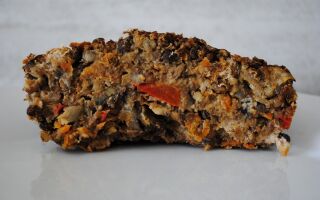
Don’t throw away the pulp! You can make pulp crackers with the leftovers!

I drank this before a bike workout, and I have to say, I had one of my best workouts this spring after it.

Cheers!

Comments
9 Comments »
Categories
Ninja Blender, Ninja Mega Kitchen System, Ninja Pulse
Tags
Ninja Blender; V8 Juice; Tomato Juice
Comments rss Comments rss
Trackback Trackback

Making Cashew Butter with the Ninja Single Serve Cup

Angela | May 20, 2013

Last week, I received a question in the comments asking if the Ninja Single Serve Cup could make cashew butter.

I had never done this before, but my initial thought was that it would be possible, but could be somewhat frustrating to have to unscrew the blade a few times in the process to scrape down the sides.

So, I set up to test this out, using my Ninja Pulse. I chose the Pulse for this project because if a Pulse will do it, any other Ninja with a single serve cup can do it.

Top Line: Yes, this is possible. But, if you have a Ninja Kitchen System with a food processing bowl, I would ultimately still choose that option over a single serve cup. It will just be more efficient.

For those that don’t have a KS model, I’ll walk you through the steps below. You’ll still get a decent cashew butter, but, it may be just a tad chunkier than what you could get out of a food processor.

Using the Ninja Single Serve Cup to Make Cashew Butter

First up, the ingredients:

  • One cup of cashews of your choice (optionally soaked for at least four hours and rinsed
  • One tablespoon of melted coconut oil, or other oil of your choice
  • Water, as needed

Making Cashew Butter in the Ninja Single Serve | Test Kitchen Tuesday

(I guess showing you the oil in a clear bowl defeated the purpose, huh?!)

Next, add the cashews and then the oil into the single serve cup.

Making Cashew Butter in the Ninja Single Serve Cup | Test Kitchen Tuesday

Then, begin to Pulse. Regardless of your model, it is best to pulse your way through this project to not burn out the motor.

Making Cashew Butter in the Ninja Single Serve | Test Kitchen Tuesday

After about three pulses, you’ll have chopped up nuts.

ninja_cashew_ss_4

Now is where discretion comes in. Keep pulsing, and when you get to a point where nothing is happening, you’ll want to remove the cup, unscrew the lid, scrape down the mixture, and add a little water. How much water is really up to you, but I would start with a tablespoon and go from there. You may need more, but you probably won’t need less. You’ll need the water to get it to blend the rest of the way.

Making Cashew Butter with the Ninja Single Serve | Test Kitchen Tuesday

Once you have added the water, continue to pulse 6-7 more times and determine if your mixture is done. At a certain point, it will stop moving again, and will likely be done. If it doesn’t seem creamy enough, add a little more water, always adding in small amounts. It’s easy to keep adding, but hard to remove!

Making Cashew Butter in the Ninja Single Serve | Test Kitchen Tuesday

When your mixture is done enough to your liking, take a spoon, stir everything together very well, and you’ll have cashew butter. It probably won’t get quite as smooth as if you’d used the food processor bowl on a KS model, but it still comes out spreadable, even with a few little chunks. The difference of course, is due to the different types of blades. The single serve has more of a traditional blender blade, where as the food processor bowls have more of a traditional “s” blade shape.

Making Cashew Butter with the Ninja Single Serve | Test Kitchen Tuesday

The main word of caution about this project is to not try to steady state blend cashew butter with your single serve cup. You could easily burn out the motor.

And, I would only do this with soft nuts (peanuts, cashews), not hard nuts like almonds.

I hope that helps, and, let me know any questions in the comments!

Comments
No Comments »
Categories
Ninja Blender, Ninja Mega Kitchen System, Ninja Pulse
Tags
Ninja Blender; Cashew Butter; Single Serve
Comments rss Comments rss
Trackback Trackback

How to Hide Greens in Smoothies: Put Them in Something Red & A Red “Green Smoothie” Recipe

Angela | May 15, 2013

There was a day when I couldn’t understand why anyone would put anything green in a smoothie. It just didn’t jive.

And, then one day, I did it. I added spinach to a smoothie.spinach

And, I didn’t notice it in there.

And, I felt pretty darn good afterwards.

Since that fateful day, I have thrown caution to the wind and put all kinds of greens in smoothies, ranging from the standard spinach and kale, to chard, collards, sprouts, and anything else you can think of that is leafy and green. I have even put broccoli stalks in smoothies – and they’re good!

Even though I have come to love green smoothies, I have always said they don’t have to be green. Sometimes, no matter how excited we may be about a green smoothie, a loved one may not be so excited or interested to try said concoction. Sometimes, we have to be creative, especially when feeding kids (or, in my case, a finicky husband).

The best way to make a green smoothie that isn’t green is to mask it with red ingredients. Well, honestly, to really make sure, put a little bit of a raw beet in whatever you’re making on top of whatever else red you’re using. Beets make a great “food coloring,” and you don’t need much at all to change the color of your smoothie from sorta-red to really, really red.

So, next time you’re compelled to add some greens to your smoothie – or your kid’s, or your spouse’s – and don’t really want to know they’re in there – throw in 1/2 – 1 raw beet, and poof, green no more!

red_greeen_smoothie

Here is an example for you of a filling and super nutritious green smoothie meal replacement, that comes out, well, beet red. There are about 550 calories in this, so it’s not a snack, but is a great way to start your day!

Raspberry Beet Green Smoothie

Print this Recipe!

Makes: 1 drink

Best Ninja Jar Choice:

  • Ninja Pulse: 40 ounce jar with standard blade
  • Ninja Professional Blender: 72 ounce jar with standard blade
  • Ninja Kitchen System: 72 ounce jar with standard blade
  • Ninja Mega Kitchen System: 72 ounce jar with standard blade

Ingredients:

  • 8 ounces unsweetened almond milk (or milk of your choice)
  • 2 handfuls chopped spinach or kale
  • 1/2-1 small beet (raw, but peeled)
  • 1 cup frozen raspberries
  • 1/2 avocado
  • 1 small frozen banana
  • 1 scoop Amazing Grass Amazing Meal (vanilla)
  • Small chunk of fresh ginger
  • Sprinkle of dulse powder (if you have it, no worries if not)

Method:

  • Add milk and kale to the jar of your blender until combined
  • Then, add all the remaining ingredients; Pulse 4-5 times to begin blending, and then blend on “2” (hold down Pulse lid) until you reach a consistency you like, probably about 1 minute)

Nutritional Breakdown

Made with Trader Joe’s unsweetened almond milk and using the 1/2 beet portion.

image image
Comments
No Comments »
Categories
Ninja Blender, Ninja Mega Kitchen System, Ninja Pulse
Tags
Food; Recipes; Green Smoothie; Ninja Blender; Ninja Mega
Comments rss Comments rss
Trackback Trackback

Carrot Ginger Soup

Angela | April 30, 2013

Do you ever feel like you’re giving off one impression, but then, get feedback that you are giving off a totally different impression unwittingly?

Apparently, I have been doing just this without realizing it! You see, in the last couple of weeks, several people that don’t know each other have made comments to me that indicate they think I spend a ton of time cooking.

“I thought of you when I was making a dish that took 2 hours.” Or, “I just don’t have the time you do to cook.”

Holy cannolis, I have no idea why my friends think I spend hours in the kitchen (especially since we don’t have a kitchen…still). While we do eat  most meals at home and I do like to eat fresh, healthy, seasonal food, I most definitely do not spend hours preparing it! Between working full time, remodeling a house, and, trying to stay in shape, it is just not physically possible for me to slave over my double burner hotplate like that!

For those curious about the remodel, we have a goal to have a finished kitchen by the end of July. I should probably write up a post on how we have lived for 9 months without a kitchen!

Anyway, today, I have a recipe for something that is tasty, easy, fast, and makes a lot – exactly the kind of recipe I like. I made this Saturday evening after a full day of home improving, and it came together in a snap. MP900049619[1]

This recipe was inspired by a soup I picked up at PCC Market a few weeks ago, from CookSF. While their soup was delicious, and made from ingredients you would recognize, it was also expensive – I think it was around $6.50 for a container. Ouch. I knew right away I needed to recreate it!

Carrot ginger soup uses simple ingredients you probably already have on hand, and you can make a big pot for way less than $6.50! Here’s my take, but you could really go any number of directions with this depending on your tastes. I think next time I may add some turmeric root as well – the color of this soup just screams that it would like some turmeric.

Serve with a spinach salad topped with pears, walnuts, and dried cranberries on the side for a hearty and filling – and super healthy – meal.

Carrot Ginger Soup | Test Kitchen Tuesday

Carrot Ginger Soup

Print this Recipe!

Makes: About 8, 1 cup servings

Time Required: 10 minutes prep; 45 minutes to simmer

Ingredients:

    • 1 tablespoon coconut oil
    • 6 medium/large carrots, peeled and roughly chopped
    • 1/2 yellow onion, peeled and roughly chopped
    • 1 tablespoon minced fresh garlic
    • 3 tablespoons peeled, minced fresh ginger root
    • 1 large apple, peeled and roughly chopped
    • 1 teaspoon sea salt, or to taste
    • 4.5 cups vegetable stock (make your own and save money!)
    • 1, 12-ounce can of coconut milk (must be from the can, not carton – I used Trader Joe’s Light Coconut Milk because that is what I had on hand, but whole fat is likely better)

Method:

  • Heat the coconut oil in a 2-quart stockpot over medium heat until melted.
  • Sauté the carrots and onion, and cook for several minutes, stirring often, until softened.
  • Add the garlic, ginger, and apple. Sauté until the garlic and ginger
    are fragrant.
  • Add the stock and salt. Reduce the heat to medium low and simmer, covered, for 45 minutes, or until the vegetables are very tender.
  • Ladle carefully into your blender and puree the soup until smooth. This will fit in one batch in a 72 ounce jar of a Ninja Blender, but you may have to do two batches if you have a smaller blender jar.
  • Return the soup to the pot, add the coconut milk. Taste test to determine if you need more salt, and heat until warm before serving.

Nutritional Info

Based on homemade stock without added salt, and Trader Joe’s light coconut milk. Store bought stock will add sodium.

image image
Comments
3 Comments »
Categories
Ninja Blender, Ninja Mega Kitchen System, Ninja Pulse, Soups
Tags
Food; Recipe; Carrot; Ginger; Soup
Comments rss Comments rss
Trackback Trackback

Can You Make Coconut Butter in the Ninja Blender?

Angela | April 16, 2013

I love coconut, in all forms and fashions. Add in some mango and pineapple, and I could be set for days. Perhaps I missed my calling and should really move somewhere more tropical. The Pacific Northwest is not exactly known for its tropical fruits, after all.

Of the many creations that are made from coconut, I think the most decadent coconut treat is coconut butter. It’s a little thick, and requires heating to be spreadable, but is really so good! Most people spread this on toast or other baked goods – but honestly, I usually just eat it straight out of the container on a spoon.

Reader Janis left me a comment a while back about the feasibility of making coconut butter in the Ninja Blender and a question about the best pitcher to use. Surprisingly, I had never tried this! It only takes one ingredient (unsweetened shredded coconut), and could save significant money over store bought, so I thought I’d give it a shot.

Top Line: The fact is, it is possible if you have one of the “Kitchen System” models with a food processor bowl, but it takes a while. I referenced this article from The Kitchn for guidance in my project, and started with the 72 ounce pitcher to answer the specific question Janis had. I used this coconut:

Making Coconut Butter | Test Kitchen Tuesday

Sadly, even following directions from The Kitchn, I just couldn’t get it to work out with the 72 ounce pitcher, even with frequent pushing down, because it kept getting caught in the corners. I used slightly more than called for in the original article — 2 & 2/3 cups, because that’s how much was in my bag, and, more is always better with the Ninja. After 5 minutes, it wasn’t much different than it was after one minute.

Making Coconut Butter | Test Kitchen Tuesday

As you can see, it sort of holds together, but is fairly grainy.

Making Coconut Butter | Test Kitchen Tuesday

So, I switched to the 64 ounce bowl of the Ninja Mega KS, and I started seeing the results described in The Kitchn’s article. You can sort of see that the bottom of the bowl is a smoother consistency than the top.

Making Coconut Butter | Test Kitchen Tuesday

I blended and pushed down a bit more, and finally gave in and added 1 tablespoon of coconut oil. After about 7 or 8 minutes in the food processor bowl, I finally got as much of a butter as I thought I was going to get.

Making Coconut Butter | Test Kitchen Tuesday

In the end, I had a fairly decent coconut butter, but it is still a bit grainier than what you might buy. After reading a bit on the topic, there are mixed opinions as to what is the best device to make coconut butter. So people say Vitamix; some people say the Vitamix can’t do it. Some people have said Blentec. Some think a traditional food processor is best.

Since I don’t have those other items, I can only say that it is possible with the food processing bowl of the Ninja Blender, and will probably work best in the mini-prep bowl, if you have it. I wouldn’t recommend trying this if you only have a 72 ounce bowl. It could probably work with the Ninja Pulse as well, since the pitcher is round.

Have you tried this before with success? Let us know!

Comments
12 Comments »
Categories
Ninja Blender, Ninja Mega Kitchen System, Ninja Pulse
Tags
Coconut Butter; Ninja Blender
Comments rss Comments rss
Trackback Trackback

Kitchen Sink Green Smoothie

Angela | April 9, 2013

I am a lucky indeed — I work from home most days. And while our home is a bit of a disaster zone do to our in-progress remodel, it is still nice to spend the day with our dog and cat at  my side. And sometimes, they are at each other’s sides. What am I going to do with these two?

image

Even though I work from home a lot, the days can be rather hectic, with back-to-back meetings a good portion of the week. I try to get out of the house and take my lunch someplace to have human interaction, but sometimes that’s just not possible. And that’s when the meal replacement smoothie comes into play. With very little prep work I can have a filling and nutritious lunch – which is really just a big blended salad!

When doing meal replacements, I typically just toss what’s available in the fridge along with some nutritional boosters into the blender and see what happens. In general, I try to create balanced drinks that have protein, fat, carbs, and fiber to keep me full and my mood stable. I mix veggies and fruits to help balance the sweetness. Here’s what I ended up with one day last week, and it was filling, and importantly, tasty!

This smoothie has almost your entire daily value of potassium, 9X your RDA of vitamin A, 4X your Vitamin C, nearly half your iron, and significant amounts of many other vitamins and minerals. In other words, there’s a lot of nutrition in this cup!

lunch_green_smoothie

This smoothie has almost 600 calories, which is just about right for me for lunch (I am 6 feet/160 lbs). You may need more or less depending on your size, so adjust accordingly.

Kitchen Sink Green Smoothie

Print this Recipe!

Serves: 1

Best Ninja Blender Jar Choice:

  • Ninja Pulse: 48 ounce jar with standard blade
  • Ninja Professional Blender: 72 ounce jar with standard blade
  • Ninja Kitchen System: 72 ounce jar with standard blade
  • Ninja Mega Kitchen System: 72 ounce jar with standard blade

Ingredients:

  • 8 oz coconut water
  • 1 cucumber
  • 1/2 cup parsley
  • 2 mint sprigs
  • Juice from one lemon
  • 1/2 cup frozen butternut squash cubes
  • 1/2 cup frozen pineapple
  • 1/2 fresh mango
  • 1/2 cup cantaloupe chunks
  • 2 handfuls chopped kale
  • 1/2 avocado
  • 1 scoop favorite protein powder
  • 1/2 teaspoon dulse powder
  • 1/2 teaspoon turmeric powder
  • 1/2 teaspoon maca root powder

Method:

  • Add all ingredients to a high speed blender
  • Pulse to combine
  • Blend on high (3 for Ninja blenders) for 90 seconds-2 minutes to thoroughly combine

Nutritional Breakdown

Based on 1 scoop Jarrow Optimal Plant Proteins as the protein powder.

image image
Comments
2 Comments »
Categories
Breakfast, Lunch, Ninja Blender, Ninja Mega Kitchen System, Ninja Pulse
Comments rss Comments rss
Trackback Trackback

The Great Ninja Blender Q&A

Angela | April 4, 2013

I get a lot of questions about Ninja Blenders. This is not surprising, since the main search terms people use to find Test Kitchen Tuesday have some variant of “Ninja Blender” in them!image

I thought it might be worthwhile to do a big roundup that contains the most common questions I get to save current (and future) readers time from scanning the hundreds—and even thousands—of comments on this topic. If you have a question I don’t address below, please leave it in the comments so we can get it answered. Odds are if you have the question, so does someone else.

So, without further adieu, let’s get to it, shall we?

  • Can any of the Ninja Blenders make hot soup? Nope, unlike a Vitamix, the Ninja does not heat up the ingredients as it blends. You can definitely blend hot soup in it, but, you can’t start with cold ingredients and end up with soup.
  • Are the single serve cups from one model compatible with another model? Unfortunately, no. The single serve cups are specific to the model they come with. For example, you can’t take a single serve cup from a Ninja Pulse and use it in the Ninja Mega. And, if your unit wasn’t designed for single serve cups, you can’t buy the single serve cups and have them work. This is a total bummer.
  • Do I need the mini prep bowl for the Ninja Mega Kitchen System? This is totally personal preference and where you plan to buy the NMKS. The mini prep bowl comes with the model sold at Bed, Bath & Beyond, Amazon, and, sometimes, Target. If you buy directly from Ninja, you likely won’t get the mini prep bowl (unless you pay extra). If you make lots of food processor recipes in small batches (like baby food), you will find it valuable. As with all Ninja Blenders, the Ninja Mega works best with volume – so, if you’re just making something small, you may have a hard time blending in in the 64 ounce food processor bowl. However, if you don’t care too much about small batches, you probably won’t miss it.
  • Can you use X/Y/Z part from one Ninja model on another? In general, the answer here is no. The parts are unique to their specific models. I think this I a huge fail on the part of Euro Pro, but, then again, this is just my opinion.
  • What are the Ninja Blender jars made of? They are made of BPA-free plastic and are dishwasher safe. Be sure to put the lids on the top rack, or they could melt (I speak from experience).
  • How do the plastic jars hold up? For the most part, the plastic jars are very durable and hold up well in the dishwasher. You have to be careful removing the blade, though, as that is where the potential to create scratches in the jar occurs. Pull the blade straight up to remove – that way the sharp blade doesn’t come into contact with the plastic of the jar.
  • How do the Ninja Blenders (any model) compare to a traditional blender/Magic Bullet/Nutrilbullet/fill-in-the-blank type blender? One of these days, I may do a huge showdown between the gamut of blenders on the market. But right now, I can tell you there are pros and cons to all types of blenders. The Ninja Blender family will blend the stuffing out of just about anything you can think of, and they will do it quickly. The unique blade design running up the center means you get quick mixing of very hard ingredients without any “jamming.” However, this blade design can also be a detractor, as it can be hard to get green smoothies totally smooth without any green bits (it is possible, you just have to add ice and blend a little longer than you might expect). The power on the machines is more than ample, and once you go to this kind of power, it is hard to go back. I had to blend some things in a traditional blender at a rental house recently, and it was highly frustrating! It’s sort of like driving a Porsche for a while and then driving an electric car!
  • Have you tried any of the recipes from the Ninja folks? No, I honestly haven’t! I have read through the recipe booklet that comes with the Ninja Mega KS, but I eat a little differently than the mainstream audience that Ninja must target. Therefore, none of their recipes are terribly appealing to me. I just make mine up as I go, and then share them with you!
  • Can you make bean/nut/rice/wheat flour with the Ninja blenders? Absolutely, yes!
  • Can the Ninja blenders make juice? Ah, this is a highly debated topic. The answer is yes, you can make juice with any of the Ninja blenders. But, how you do it can vary. If you like pulp, you can add 5-6 ice cubes to your fruits and veggies before blending and get “whole food juice.” If you don’t like pulp, you’ll need to add water before blending and then strain before drinking. Some people don’t mind this step, some people do. If you are going to juice a lot (daily), I would probably recommend buying a dedicated juicer.
  • Can the Ninja Pulse do what the more powerful Ninjas can? For the most part, yes. I have used my Ninja Pulse to make all my smoothies, nut butters, and a plethora of blending projects. It’s main differences are the smaller size of the jar, blade design (4 blades instead of 6), and the fact that you can only “steady state” blend on one speed, which I would say is comparable to level “1” on Ninja Professional blenders. It is way more powerful than most traditional blenders, and the smaller size is nice for a small apartment or dorm room.

Update: 4/5/13

  • I can’t get my blender to start! There is a blinking red light, but it won’t blend - what’s wrong? For Ninja Professional Blenders, the odds are you have the lid on slightly wrong. There are two arrows you need to line up: one on the lid itself, and on the handle. The blender won’t blend until the lid is on with those to arrows aligned.
  • Are any parts of the Ninja Blenders microwave safe? No, there are no microwave-safe parts. You can blend hot foods in any of the containers, just don’t microwave.

And those, friends, are the most common questions I get. Have I overlooked yours? Let me know in the comments!

Comments
11 Comments »
Categories
Ninja Blender, Ninja Mega Kitchen System, Ninja Pulse
Comments rss Comments rss
Trackback Trackback

Fresh Strawberry Butternut Smoothie

Angela | March 26, 2013

It’s strawberry season, it’s strawberry season!

This time of year is so great from a produce perspective. New crops start popping up, and odds are you’re starting to see fresh strawberries in your supermarket or farmer’s market. Fresh Strawberry Butternut Smoothie | Test Kitchen Tuesday

While we don’t get “local” Northwest strawberries until around July, California berries start coming into season right about now, and I can’t resist picking up a few. I stick to strictly organic when it comes to strawberries, as they are a pretty heavily sprayed crop and land squarely on the Dirty Dozen (the produce list, not the movie, ha!)

Did you know that strawberry tops (the green part) are perfectly edible? When I get fresh strawberries, I throw them into the smoothie, tops and all! I used frozen butternut squash in this smoothie because it works well as a base without overpowering the strawberries. It would be predictable to use banana, and you could do that as well.

This smoothie is packed with potassium and magnesium, so I like it after a workout.

Speaking of potassium and magnesium, I keep meaning to write about the importance of electrolytes in our diets, and how most people are super stocked up on sodium but deficient in a lot of the other electrolytes. Someday soon, I promise!

In the meantime, enjoy this taste of spring!

Fresh Strawberry Smoothie

Print this Recipe!

Best Ninja Blender Jar Choice:

  • Ninja Pulse: Single serve cup
  • Ninja Professional Blender: 72 ounce jar with standard blade
  • Ninja Kitchen System: 72 ounce jar with standard blade
  • Ninja Mega Kitchen System: Single serve cup

Ingredients:Using the Single Serve Cup for a Strawberry Butternut Smoothie | Test Kitchen Tuesday

  • 1 cup unsweetened almond milk
  • 3/4-1 cup frozen butternut squash (I buy it already cubed and frozen from Stahlbush Island Farms – you can get this at Whole Foods); Start with 3/4 cup and adjust from there if the smoothie comes out too runny on initial blending
  • 1 scoop favorite vanilla protein powder
  • 4 fresh strawberries with tops

Method:

  • Add all the ingredients in the order listed into your selected blender jar
  • Pulse 2-3 times to combine, then blend on “3” (or hold down single serve cup) until combined

Nutritional Breakdown:

This will vary depending on if you use protein powder. I calculated it based on 1 scoop of Jillian Michaels Whey Protein, which has 100 calories.

image image
Comments
No Comments »
Categories
Ninja Blender, Ninja Mega Kitchen System, Ninja Pulse, Smoothies
Tags
Ninja Blender; Recipes; Smoothie; Strawberry; Butternut
Comments rss Comments rss
Trackback Trackback

DIY No Bake Coconut Macaroons

Angela | February 27, 2013

I didn’t realize this fact, but 2Chili informed me last week that macaroons are all the rage right now. He also explained the movie plot of several of the best picture nominees for this past weekend’s Oscars. Clearly, I have been living under a rock!

In any case, I have been on a quest to make a reasonable facsimile of these Hail Merry Macaroons I found at Whole Foods. Good is just not even a strong enough word to describe how good they are!

I decided I needed a dehydrator to do this project, and honestly I got sidetracked along the way as I was dehydrating lots of fun stuff! But, I finally came back to the macaroons, and, after a couple of tweaks, have a recipe for you.

Truth be told, you don’t need to dehydrate these. You can simply make them, form into balls, and refrigerate. But, if you want to dehydrate for more of a “cookie” feeling, go right ahead! While we’re being truthful, you may as well count on this recipe making one or two less than it says, because it’s hard to not “sample” as you roll them into balls. You’ve been warned!

Coconut Macaroons from Test Kitchen Tuesday

Simple Raw Coconut Macaroons

Print this Recipe!

Makes: 16 macaroons

Best Ninja Blender Jar Choice:

  • Ninja Pulse: 40 ounce jar with standard blade
  • Ninja Professional Blender: 72 ounce jar with standard blade
  • Ninja Kitchen System: 40 ounce food processor bowl with standard blade
  • Ninja Mega Kitchen System: 64 ounce food processor bowl with standard blade

Ingredients:

  • 2 cups sweetened coconut
  • 1/2 cup almond flour
  • 1/4 cup pure maple syrup (use 1/2 cup if your coconut is unsweetened)
  • 1/4 cup coconut butter or manna, softened
  • 1 teaspoon vanilla
  • Sea salt to taste

Method:

  • Add all ingredients to your food processor or Ninja Blender jar
  • Pulse 8-10 times to combine
  • Refrigerate for about an hour
  • Roll into balls and dehydrate for 4-6 hours
  • Alternatively, you can just put them back in the refrigerator as rolled balls, no dehydrating required!

Nutritional Breakdown

image image
Comments
1 Comment »
Categories
Ninja Blender, Ninja Mega Kitchen System, Ninja Pulse
Tags
Macaroons; No Bake; Raw
Comments rss Comments rss
Trackback Trackback

Ninja vs. Vitamix Green Drink Showdown

Angela | February 18, 2013

I get so many questions about how the Ninja Professional Blender stacks up against the Vitamix, and most often, I really don’t know, as I had never used a Vitamix until last week. However, I do know quite a few folks that own Vitamixes, so when I get questions, I often ask one of them, “How does it do X?”

I’m sure they really appreciate tolerate this questioning.

To see this blender first hand, last week, I went over to my friend Lisa’s to do a head-to-head showdown with a green drink I make quite often. It’s an iteration of the Dr. Oz Detox Drink, and contains:

  • 8 ounces coconut water
  • 2 handfuls kale
  • Juice from one lemon
  • 1/2 a cucumber
  • 1/2 cup frozen pineapple
  • 4-5 mint sprigs
  • Small chunk of ginger
  • Handful of ice

As most people that have blended greens with the Ninja standard jars know, it doesn’t fully pulverize greens and leaves little flecks behind. This is primarily due to the blade design, with the blades running through the center instead of being at the bottom. The single serve cups (if you have one) successfully pulverize greens into oblivion, but the standard jars really don’t completely obliterate them.

The idea with this test was to blend exactly the same ingredients for exactly the same amount of time, and see what happened. We had a little helper in this process, who is a much better model for these drinks than I am!

Neither he nor his older brother cared for the end result much, which is honestly not surprising! What was surprising was their willingness to try. I can’t even get 2Chili to try one, so, that is really saying something about their willingness to experiment with new things. If you want to give green drinks to kids, be sure to hide the greens in something dark, like blueberries or strawberries, and add 1/2 a banana or so for sweetness.TasteTester-8593

Since we don’t have a kitchen right now, it was great to go to Lisa’s and do this project in a proper setting. She even took the photos! I need to to projects at her house more often.

Anyway, on to the test. Here we have the Ninja Mega Blender and the Vitamix as we started adding ingredients. I don’t know what model Vitamix this is, but it does have variable speeds. I found out this is a Vitamix 5200.

Here is a little video we made if you prefer to see them in action.

Ninja vs. Vitamix Green Drinks

If you’re more about photos, here you go…

NinjavsVitamix-8574

We loaded these up with plenty of kale (the more the better, right?)

NinjavsVitamix-8588

And then topped it with pineapple. I added exactly 6 ice cubes (not pictured) to each jar before we blended.

NinjavsVitamix-8590

After 45 seconds of blending, this is what we had. To be fair, I have created smoother versions of this drink at home — when it wasn’t based on time — but I wanted the test to be under exactly the same conditions and time constraints. You can clearly see that the Vitamix made a much smoother drink with fewer kale flecks.

NinjavsVitamix-8597

Here is this same drink that I made when I was reviewing the Ninja. The difference is I made this without coconut water (just used ice only for liquid) and probably blended longer. As you can see, it’s much smoother.

DSC_0878

Bottom Line: Due to the design, the Vitamix makes a smoother drink faster, but does that mean it’s better?

You know, I just don’t know that I’d say that. The Ninja is just so versatile (and less than half the cost), so it really depends on what you want it for and your budget. If you want to only make fast smoothies (but don’t care about single serve cups), then yeah, Vitamix wins. Although, did you notice I had to really work the smoothie with the little prodding device to get it all incorporated? That was not necessary with the Ninja. 

If you want to make to-go smoothies in a single serve cup, my homemade Lara Bars, or even homemade nut butter, I believe the Ninja is better. But, since I don’t have absolute proof, it looks like I will have to go back and do more tests, huh?

Comments
9 Comments »
Categories
Ninja Blender, Ninja Mega Kitchen System, Ninja Pulse
Tags
Ninja Blender; Vitamix
Comments rss Comments rss
Trackback Trackback

« Previous Entries

Want to Help Support the Site?

Simply buy your kitchen items (or anything) via this button at Amazon. There is no cost to you and I get a small fraction for referring you. Thanks for stopping by!

Ninja Blender Questions?

Start here!

RSS

 Subscribe in a reader

Add to Google Reader or Homepage

Enter your email address to subscribe to this blog and receive notifications of new posts by email.

Facebook

Tweet, Tweet!

  • Wonder if they can also help me obtain that extra million I misplaced? #wasteofadspend http://t.co/K8sSat24lQ 1 day ago
  • Today on TKT, make your own "V8 Juice" in your high speed blender and save a ton of sodium: wp.me/p1ugZ0-168 3 days ago
  • Personal best today: 172 RPM spin ups on the bike trainer. #motivated http://t.co/b5s3JKs3vQ 6 days ago


Check out my eBook – Available Exclusively at Amazon.com!


Search

Most Popular Posts

Ninja Mega Kitchen System Review

Ninja Blender Review

Ninja Pulse Review

BodyMedia FIT Body Management System Review

How to Make Juice with the Ninja Blender. Part 1

How to Make Juice with the Ninja Blender. Part 2

How to Make Peanut Butter in 3 Minutes

Banana Cream Pie Blender Ice Cream

Got {Almond} Milk?

Blueberry Pie Energy Bars

Making Apple Juice with a Ninja Blender


rss Comments rss valid xhtml 1.1 design by jide powered by Wordpress get firefox